Until the ambulance arrives
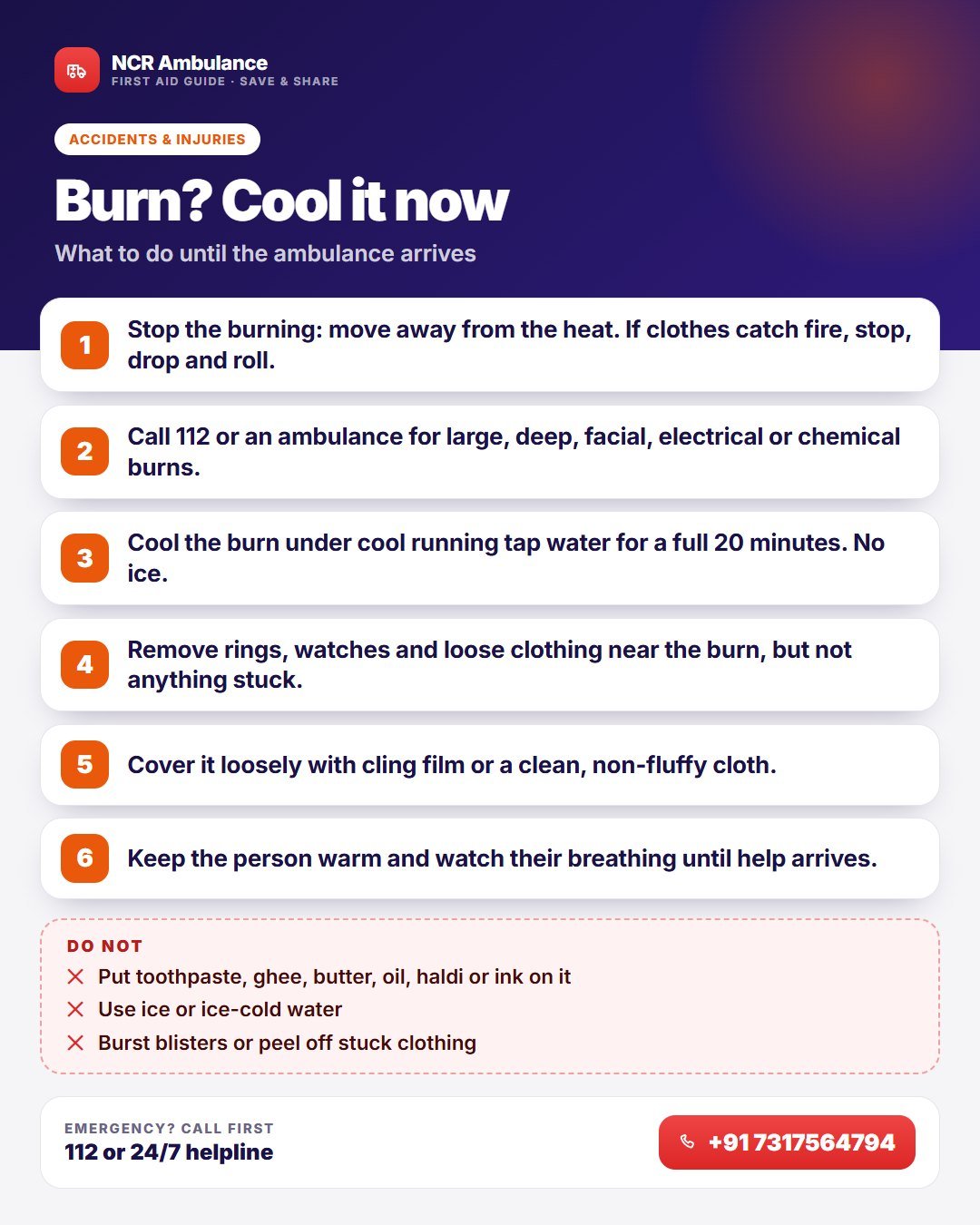
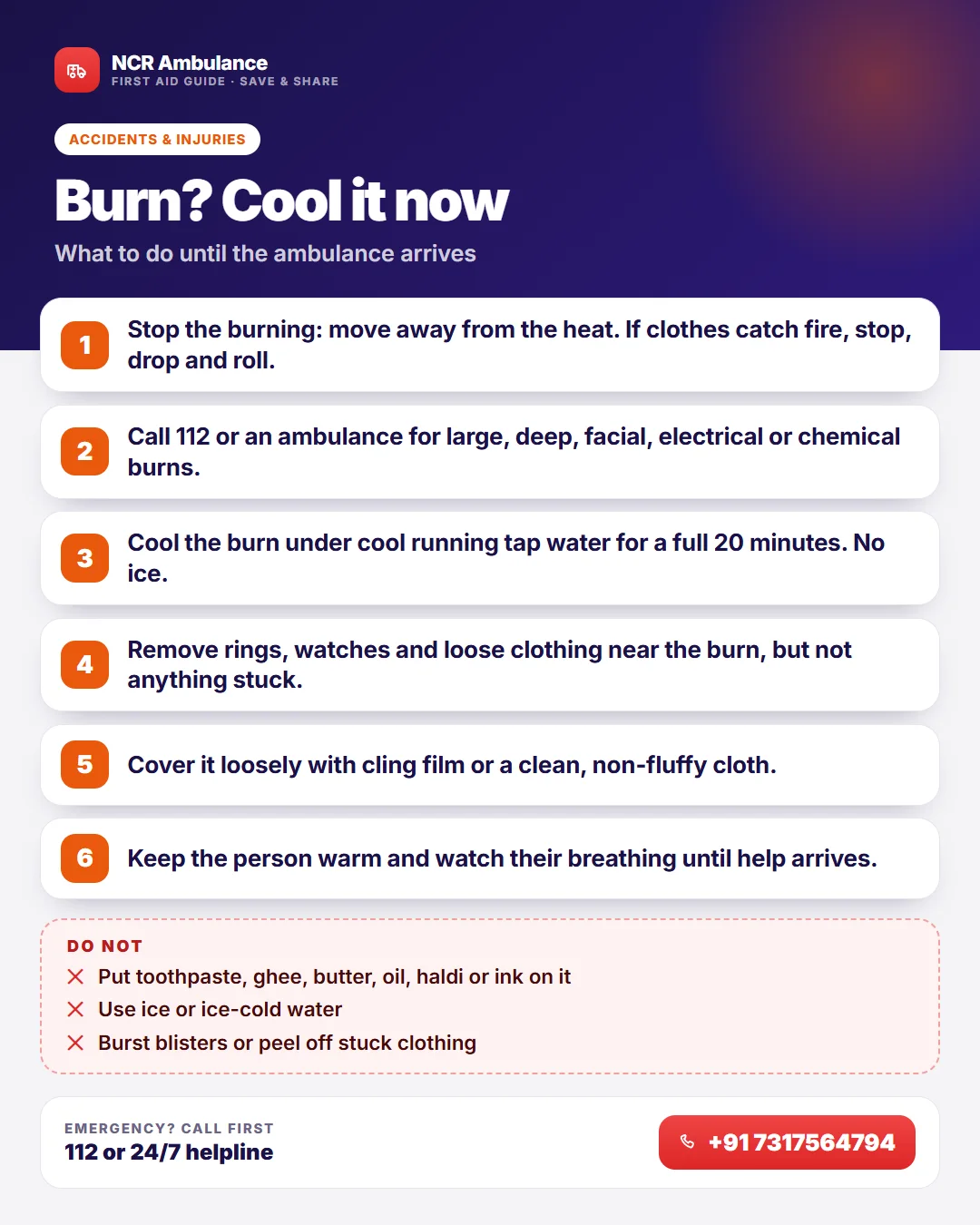
Burn? Cool it now
- Stop the burning: move away from the heat. If clothes catch fire, stop, drop and roll.
- Call 112 or an ambulance for large, deep, facial, electrical or chemical burns.
- Cool the burn under cool running tap water for a full 20 minutes. No ice.
- Remove rings, watches and loose clothing near the burn, but not anything stuck.
- Cover it loosely with cling film or a clean, non-fluffy cloth.
- Keep the person warm and watch their breathing until help arrives.
Do not
- Put toothpaste, ghee, butter, oil, haldi or ink on it
- Use ice or ice-cold water
- Burst blisters or peel off stuck clothing
In this guide
Hot oil splashes from the kadhai, a pressure cooker lid bursts open, a toddler pulls a cup of tea off the table, or an anaar flares up in a child's hand on Diwali night. Within seconds someone runs for toothpaste, ghee or a bottle of ink, because that is what their grandmother did. These remedies trap heat in the skin and can make the burn deeper.
This guide explains what actually works: cooling the burn the right way and for long enough, covering it safely, and knowing when a burn is serious enough to call an emergency ambulance for burn injuries. It also covers chemical, electrical and firecracker burns, and kitchen fires.
Burns first aid: step by step
Step 1: Stop the burning
Get the person away from the heat. If their clothes catch fire, they must stop, drop and roll: stop moving, drop to the ground, cover the face with the hands and roll over and over to smother the flames. You can also smother flames with a heavy cotton or woollen blanket, or put them out with water. Running fans the flames.
In a kitchen fire, switch off the gas at the stove and at the cylinder regulator only if you can reach them safely. Never throw water on a burning kadhai of oil: cover it with a well-fitting lid and turn off the gas. If you smell gas, don't switch any lights or appliances on or off; open the doors and windows, turn off the regulator and get out. If a fire is spreading, get everyone out and call 112.
Step 2: Call for help if the burn is serious
Call 112 or our helpline (+91 7317564794) for any serious burn (see the list below) and for anyone who was caught in a fire or a smoke-filled room. For a large burn or any breathing trouble, ask for an ALS ambulance with oxygen support. Start cooling the burn while you wait.
Step 3: Cool the burn with running water for 20 minutes
Hold the burnt area under cool running tap water for 20 minutes. Watch the clock, because 20 minutes feels very long. Cooling stops the heat damaging deeper layers, eases pain and swelling, and can help the burn heal better. It is still worth doing up to three hours after the burn.
If there is no tap nearby, use a shower, pour water continuously from a bucket and mug, or use bottled drinking water. The water should be cool, not ice-cold. Cool the burn, not the whole person.
Step 4: Remove rings, watches and loose clothing
Burnt skin swells quickly. While you cool the burn, gently take off rings, bangles, watches, belts, shoes and any clothing near the burn. If clothing is stuck to the skin, leave it and cut around it, because pulling it off tears the skin.
Step 5: Cover the burn loosely
After cooling, cover the burn to protect it from germs and air, which also eases the pain. Cling film (kitchen food wrap) is ideal: lay it over the burn in strips rather than wrapping it tightly around a limb, because the area will swell. A clean plastic bag works well for a burnt hand.
If you have neither, use a clean, non-fluffy cotton cloth or pillowcase. Don't use cotton wool or fluffy towels, which stick to the wound. Don't use adhesive plasters on burnt skin.
Step 6: Keep the person warm
Cool the burn, but keep the person warm. Large burns and long cooling can lower body temperature quickly, especially in children, older people and in winter. Cover the rest of their body with a blanket and watch their breathing until help arrives.
Many burns in young children are scalds from hot tea, milk or a bucket of bathing water heated with an immersion rod. A child's skin is thinner than an adult's and burns more deeply at lower temperatures, so even a scald that looks small needs a doctor. Cool it for the full 20 minutes and keep the rest of the child wrapped up warm while you do.
Why toothpaste, ghee, ice and butter make burns worse
Toothpaste, ghee, butter, oil, haldi and ink don't cool a burn. Fats and oils hold the heat in the skin so it keeps burning. Pastes and powders contaminate the wound, can cause infection and hide how deep the burn is, so doctors have to scrub them off, which is painful for the patient. Ice and ice-cold water can damage burnt skin further and chill the body.
Blisters are the body's own sterile dressing. Don't burst them, and don't peel away loose skin, because breaking them opens the wound to infection. For more remedies like these that do more harm than good, see our guide to first-aid myths in India.
How to know if a burn is serious
Call an ambulance or go to hospital urgently if the burn:
- is larger than the person's palm
- is on the face, hands, feet or genitals, or over a joint such as the knee or elbow
- goes all the way round an arm, a leg or the chest
- looks deep: white, waxy, leathery, brown or charred, sometimes with little pain because the nerves are damaged
- was caused by electricity or chemicals
- is on a child or an older person, a pregnant woman, or someone with diabetes or another long-term illness
Also call for help straight away if the person was in a fire in a closed space and has a hoarse voice, a cough, noisy breathing, soot around the nose or mouth, or singed nostril hair. These are signs that hot smoke may have burnt the airway, which can swell and close over the next few hours. Read our guide to smoke inhalation in a fire.
| Burn depth | What it looks like | What it needs |
|---|---|---|
| Superficial | Red, painful and dry, with no blisters, like sunburn | Cool and cover; see a doctor if it is large |
| Partial thickness | Red or pink, blistered, very painful, may look wet | Cool, cover and see a doctor; large ones need hospital care |
| Full thickness | White, waxy, leathery, brown or charred; may not hurt | Emergency: call an ambulance |
Chemical, electrical and firecracker burns
Chemical burns
Acids, toilet cleaners, drain cleaners, lime (chuna) and wet cement can all burn the skin. Protect your own hands with gloves. Brush off any dry powder first, remove contaminated clothing and jewellery, then flush the area with plenty of running water for at least 20 minutes. Don't try to neutralise the chemical with another substance.
If a chemical gets into an eye, rinse it under gently running water for at least 20 minutes. Hold the eyelids open and tilt the head so the water runs away from the other eye, then go to hospital.
Electrical burns
Never touch someone who is still in contact with electricity: switch off the power at the main switch or MCB first. Electrical burns may look small on the skin but can cause deep damage inside the body and upset the heartbeat, so every electrical burn needs a hospital check. See our full guide to electric shock first aid.
Firecracker burns on Diwali
Cool the burn as above, and take rings off burnt fingers quickly before they swell. Check the hands and fingers carefully, and check the eyes.
If powder or smoke has gone into an eye, rinse it gently with clean running water. If something may be stuck in the eye or the eye is cut, don't rub, press or rinse it: cover it loosely with a clean paper cup and go to hospital. Our eye injury first aid guide has more detail.
If things get worse: breathing trouble, shock or collapse
People with large burns can go into shock as fluid leaks from the damaged skin. Watch for pale, cold, clammy skin away from the burn, a fast weak pulse, fast breathing, confusion or drowsiness. Lay them down, keep them warm and call the dispatcher again.
If breathing becomes noisy or difficult after smoke exposure, help them sit upright in fresh air and tell the dispatcher at once. If they become unresponsive and stop breathing normally, start CPR straight away and continue until the ambulance crew takes over. Our hands-only CPR guide shows how.
Burns first aid: do's and don'ts
Do
- Cool the burn under running tap water for 20 minutes
- Remove rings, bangles and watches before swelling starts
- Cover loosely with cling film or a clean cloth
- Keep the rest of the person warm
- Call an ambulance for serious, electrical or chemical burns
Don't
- Put toothpaste, ghee, butter, oil, haldi or ink on it
- Use ice or ice-cold water
- Burst blisters or peel off loose skin
- Pull off clothing that is stuck to the burn
- Cover it with cotton wool or a fluffy towel
Serious burns often need treatment in a specialist burns unit, and patients may have to be shifted there from the first hospital they reach. An ICU ambulance for critically ill patients keeps them monitored on the way. Save our number now: +91 7317564794. Our helpline arranges ambulances day and night across Delhi NCR, including ambulance service in Dwarka.
Save it. Share it.
Keep this step-by-step card on your phone
Emergencies rarely give you time to search. Save this card or share it in your family and society WhatsApp groups. One person who knows what to do can save a life.
Frequently asked questions
Is toothpaste good for a burn?
No. Toothpaste may feel cool for a moment, but it doesn't draw heat out of the deeper layers of the skin. It can irritate the wound, bring in germs and hide how deep the burn is, so doctors have to clean it off, which is painful. The right first aid is cool running tap water for 20 minutes, then a loose covering of cling film.
Can I put ice on a burn?
No. Ice and ice-cold water narrow the blood vessels and can damage burnt skin further, almost like frostbite on top of the burn. They can also chill the whole body, especially in children. Use cool or lukewarm running tap water instead, for a full 20 minutes, and keep the rest of the person warm with a blanket.
Should I burst a burn blister?
No. A blister is the body's own sterile covering over the damaged skin underneath. Bursting it, or peeling away loose skin, opens the wound to infection and can slow healing. Cover blisters loosely with cling film or a clean, non-fluffy dressing. If a blister is large, very painful or in an awkward place, a doctor will decide whether it needs draining.
What should I do if a Diwali firecracker burns a child's hand?
Get the child away from the other crackers, then hold the hand under cool running tap water for 20 minutes. Take off rings and bracelets before the fingers swell. Check the eyes and face for sparks or injuries. Cover the hand loosely with a clean plastic bag or cling film and go to hospital, because burns on a child's hand need a doctor's assessment.
When does a burn need a hospital?
Go to hospital or call an ambulance if the burn is larger than the person's palm, is on the face, hands, feet, genitals or a joint, looks white, leathery or charred, goes all the way round a limb, or was caused by electricity or chemicals. Burns in children and older people, and any burn with breathing trouble after smoke, also need urgent care.
Can I use aloe vera or a burn cream?
For a small, minor burn that has been cooled properly and isn't blistered, plain aloe vera gel can soothe the skin. Don't put creams, ointments or gels on large, deep or serious burns before a doctor has seen them, because they get in the way of assessing the wound. Never use any of these instead of cooling the burn with running water first.
Ambulance services for this emergency
24/7 coverage: Ambulance service in DelhiAmbulance service in GurgaonAmbulance service in NoidaAmbulance service in GhaziabadAmbulance service in FaridabadAmbulance service in Greater NoidaAmbulance service in Dwarka