Until the ambulance arrives
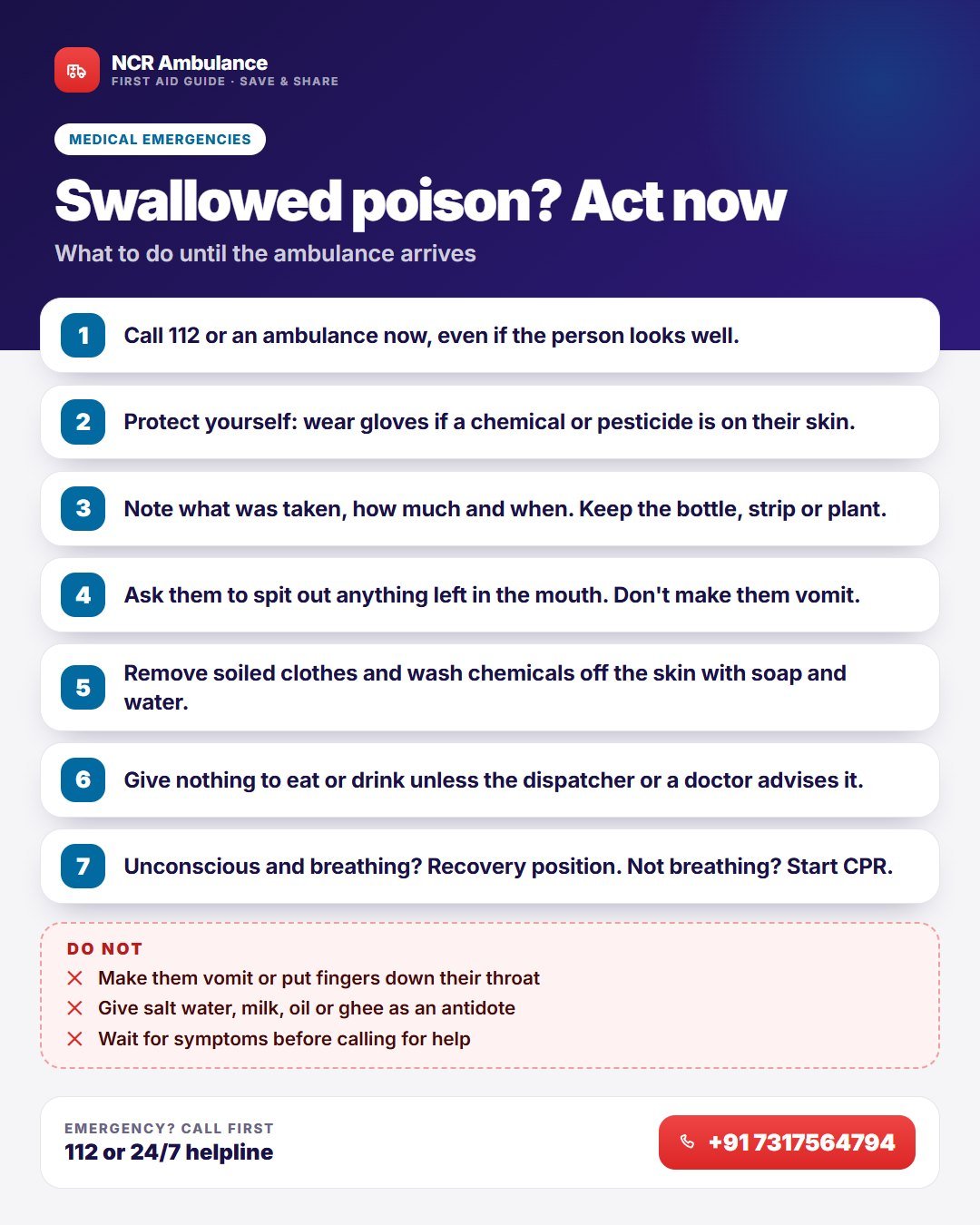
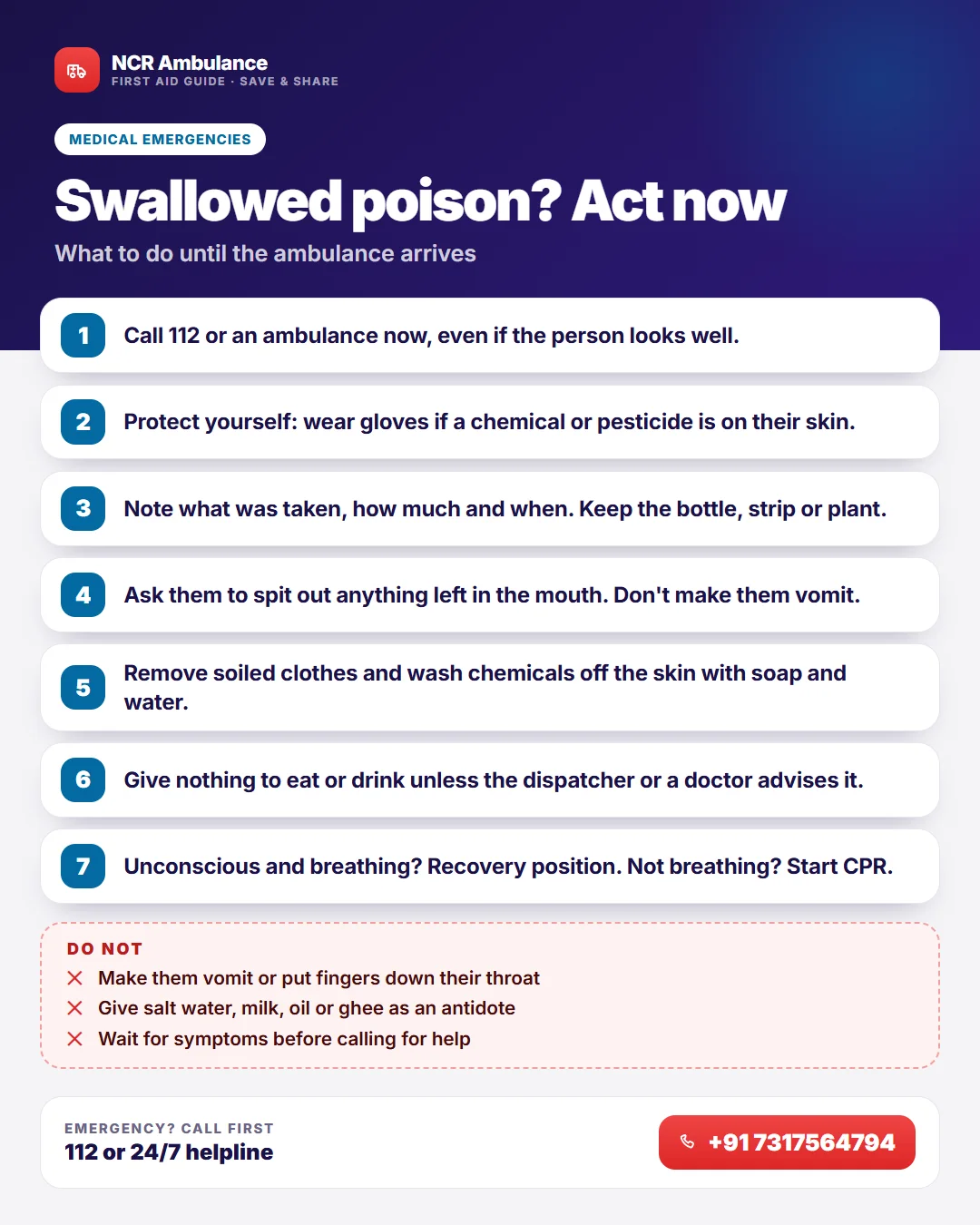
Swallowed poison? Act now
- Call 112 or an ambulance now, even if the person looks well.
- Protect yourself: wear gloves if a chemical or pesticide is on their skin.
- Note what was taken, how much and when. Keep the bottle, strip or plant.
- Ask them to spit out anything left in the mouth. Don't make them vomit.
- Remove soiled clothes and wash chemicals off the skin with soap and water.
- Give nothing to eat or drink unless the dispatcher or a doctor advises it.
- Unconscious and breathing? Recovery position. Not breathing? Start CPR.
Do not
- Make them vomit or put fingers down their throat
- Give salt water, milk, oil or ghee as an antidote
- Wait for symptoms before calling for help
In this guide
- Signs that someone may have been poisoned
- Should you make them vomit? No
- What information should you collect?
- First aid for poisoning: step by step
- Common household poisons and what to do
- Alcohol poisoning and drug overdose
- If they become unconscious or stop breathing
- Poisoning first aid: quick do's and don'ts
- Preventing poisoning at home
A toddler in a Noida flat is found in the bathroom with the cap off a bottle of toilet cleaner, coughing and drooling. His grandmother wants to make him vomit with salt water, and someone else runs to fetch a glass of milk. Both mean well, and both could make things worse.
Poisoning is common in Indian homes, from children swallowing medicines or cleaning liquids to adults who drink pesticide, kerosene or far too much alcohol. This guide explains what to do in the first few minutes, which home remedies to avoid, how to handle the most common household poisons, and when to ask for an ALS ambulance with emergency medicines and monitoring.
Signs that someone may have been poisoned
Sometimes you see it happen. More often you find someone unwell next to an open bottle or an empty medicine strip. Look for:
- Vomiting, stomach pain or diarrhoea
- Burns, redness or blisters around the lips and mouth, drooling or difficulty swallowing
- An unusual smell on the breath, such as kerosene or a chemical smell
- Drowsiness, confusion, slurred speech or seizures
- Coughing, choking or difficulty breathing
- Heavy sweating, excess saliva, very small pupils or muscle twitching, which are typical of some pesticides
Many poisons, including paracetamol, iron tablets and some rat poisons, cause few or no symptoms for hours while they damage the liver or other organs. A person who looks fine may still be in serious danger.
Should you make them vomit? No
Making someone vomit is the most common home remedy for poisoning in India, and it is dangerous. Current first-aid guidance is clear: don't induce vomiting, whether with salt water, fingers down the throat or anything else.
- Corrosive chemicals such as toilet cleaner or acid burn the food pipe a second time on the way back up.
- Kerosene, petrol and turpentine can be breathed into the lungs during vomiting and cause severe chemical pneumonia.
- A drowsy person can choke on their own vomit.
- Vomiting removes little of the poison and delays proper treatment.
Salt water can itself cause dangerous salt poisoning, especially in children. Milk, oil, ghee, raw eggs, soap water and lemon juice do not neutralise poisons, and some make vomiting and choking more likely. There is no safe home antidote, so give nothing by mouth unless the dispatcher or a doctor tells you to. Our guide to first-aid myths in India covers more of these beliefs.
What information should you collect?
The hospital team needs to know exactly what they are dealing with. While you wait, find out:
- What: the name of the product, medicine, chemical or plant. Keep the bottle, box, strip or a piece of the plant, or photograph the label. Don't smell or taste it.
- How much: count the remaining tablets, or estimate how much liquid is missing.
- When: the time it happened, even roughly.
- How: swallowed, breathed in, splashed on the skin or in the eyes.
- Who: the person's age, approximate weight, other illnesses and regular medicines.
Hand the container to the ambulance crew. It is often the single most useful thing you can give them.
First aid for poisoning: step by step
Step 1: Call 112 or an ambulance
Call immediately, even if the person seems well. Tell the dispatcher what was taken, how much and when, and whether the person is awake and breathing. If you are not sure what details to give, our guide on how to call an ambulance in Delhi NCR has a simple script. Follow the dispatcher's instructions.
Step 2: Make the scene safe and protect yourself
Take the bottle or tablets away so nobody else, especially another child, swallows more. If there are fumes, open the windows. If a chemical or pesticide is on the person's skin or clothes, wear gloves, or put plastic bags over your hands, before you touch them.
Step 3: Clear the mouth
If there are tablets, powder or liquid still in the mouth, ask the person to spit it out. For a small child, wipe out what you can see with a clean cloth. Don't push your fingers deep into the throat, and don't try to make them vomit.
Step 4: Wash off chemicals on the skin or in the eyes
Remove contaminated clothing and wash the skin with plenty of soap and water. If a chemical has splashed into the eyes, rinse them with gently running clean water for at least 15 minutes, holding the eyelids open.
Step 5: Give nothing by mouth unless advised
No water, milk, food or medicine unless the dispatcher or a doctor specifically advises it. For a corrosive chemical, they may suggest small sips of water if the person is fully alert, but don't decide this on your own.
Step 6: Position them and keep watching
Keep a conscious person sitting up or lying on their side. If they become unconscious but are breathing normally, put them in the recovery position for an unconscious person so vomit can drain out of the mouth. Stay with them and watch their breathing until the crew arrives.
Common household poisons and what to do
Kerosene, petrol, diesel and turpentine
Children often drink these when they are stored in old water or soft-drink bottles. The main danger is to the lungs rather than the stomach: even a small amount breathed in can cause severe pneumonia. Never induce vomiting. Keep the person sitting up, watch for coughing, fast breathing or blue lips, and take them to hospital even if they seem fine, because breathing problems can appear hours later.
Toilet cleaners, acids, drain cleaners and phenyl
These can burn the mouth, food pipe and stomach. Signs include burning pain, drooling, difficulty swallowing and vomiting blood. Don't try to neutralise them with baking soda, lemon juice, vinegar or milk, as the reaction can cause more damage. Rinse the lips and skin with water, and give small sips of water only if the person is fully alert and the dispatcher or doctor advises it.
Pesticides and insecticides
Organophosphate pesticides, used widely on farms and in some insect killers, cause some of the most serious poisonings in India. They are absorbed through the skin as well as the stomach. Signs include heavy sweating, drooling, very small pupils, vomiting, diarrhoea, muscle twitching and breathing difficulty. Protect yourself with gloves, remove the person's clothes, wash their skin with soap and water, and keep the container. Hospitals have specific antidotes, and severe cases may need breathing support in a ventilator ambulance on the way.
Rat poison and grain-storage tablets
Some rat poisons and grain-storage tablets contain zinc or aluminium phosphide, and some rat pastes contain yellow phosphorus. These are extremely dangerous even if the person looks well, because serious damage to the heart, liver or other organs can follow within hours or days. Phosphide poisons can also release a toxic gas from vomit, so keep the room well ventilated and avoid breathing over the person. Go to hospital immediately and take the packet with you.
Medicines
Toddlers often swallow tablets dropped by grandparents, such as blood pressure, diabetes or heart medicines, which can be dangerous even in small numbers. Iron tablets look like sweets and are a well-known cause of serious poisoning in young children. A paracetamol overdose may cause no symptoms at first while it damages the liver. Collect all the strips you can find, including empty ones.
Button batteries and magnets
A swallowed button battery (the coin-shaped type used in remotes, watches, toys and car keys) can burn through the food pipe within a couple of hours. Two or more swallowed magnets can pull together through the bowel wall. Both are urgent emergencies, even if the child seems fine. Don't make them vomit, don't give food or drink, and go to hospital immediately with the battery packaging or the toy.
Alcohol poisoning and drug overdose
Drinking a large amount of alcohol quickly, which is common at parties, weddings and late-night celebrations, can slow breathing and switch off the gag reflex. Call an ambulance if the person:
- can't be woken, or keeps slipping back into unconsciousness
- is breathing slowly or irregularly, with long pauses between breaths
- has a seizure
- vomits while semi-conscious
- has pale, bluish or cold, clammy skin
While you wait, put them in the recovery position, keep them warm and never leave them alone. Don't give coffee, a cold shower or "one more drink", and don't let them sleep it off on their back. Illicit or spurious liquor can contain methanol, which may cause blurred vision, stomach pain and breathlessness hours after drinking, and needs hospital care at once.
The same steps apply to an overdose of sleeping pills, painkillers or other drugs: call, use the recovery position, collect the strips and stay with them. If you think the overdose was deliberate, stay close, remove other medicines or harmful objects and listen without judging. Once the emergency is over, help them reach a doctor or mental health professional.
If they become unconscious or stop breathing
If the person does not respond and is not breathing normally, start CPR immediately and continue until the crew takes over. If there is poison on their lips or face, avoid mouth-to-mouth: give hands-only chest compressions, or use a face shield or pocket mask if you have one and know how. Children's hearts usually stop because of breathing problems, so rescue breaths matter more for them, given through a barrier where possible.
Our guides to hands-only CPR for adults and CPR on a child or baby explain the technique. For someone who is unconscious after a severe poisoning, an ICU ambulance for critically ill patients may be needed.
Poisoning first aid: quick do's and don'ts
Do
- Call for help even if they look well
- Keep the container, strip or plant
- Protect your hands from chemicals and pesticides
- Wash chemicals off the skin with soap and water
- Use the recovery position if they are unconscious and breathing
Don't
- Make them vomit
- Give salt water, milk, oil or ghee
- Try to neutralise acids or cleaners
- Give mouth-to-mouth with poison on the lips
- Leave a drunk or drowsy person alone
Preventing poisoning at home
- Never store kerosene, acid, phenyl or pesticides in water bottles, soft-drink bottles or kitchen containers.
- Keep all medicines, including grandparents' tablets and iron supplements, locked away and out of children's reach.
- Store cleaning products up high, not under the kitchen or bathroom sink.
- Keep button batteries and magnetic toys away from small children, and tape battery compartments shut.
- Lock away pesticides and grain-storage tablets, far from food and living areas.
In a poisoning, the most helpful things you can do are simple: call quickly, keep the container and resist the urge to try home remedies. Save our number now: +91 7317564794. Our dispatch team arranges ambulance service in Noida and an emergency ambulance anywhere in Delhi NCR, day or night.
Save it. Share it.
Keep this step-by-step card on your phone
Emergencies rarely give you time to search. Save this card or share it in your family and society WhatsApp groups. One person who knows what to do can save a life.
Frequently asked questions
Should I give milk to someone who has swallowed poison?
No, not unless a doctor or the emergency dispatcher specifically tells you to. Milk does not neutralise poisons, and it can make vomiting more likely, which is dangerous with kerosene, corrosive cleaners or a drowsy person. Give nothing by mouth, keep the container and call an ambulance. The hospital team will decide on the right treatment once they know exactly what was swallowed.
My child drank kerosene. Should I make them vomit?
Never. Kerosene is dangerous mainly because it can get into the lungs, and vomiting greatly increases that risk. Keep the child calm and sitting up, give nothing to eat or drink, and call an ambulance or go to hospital even if they seem well. Watch for coughing, fast breathing, fever or bluish lips, which can appear several hours later.
What should I do if my child swallows a button battery?
Treat it as an emergency, even if your child seems completely fine. A button battery stuck in the food pipe can cause a serious burn within a couple of hours. Don't make the child vomit and don't give food or drink. Go straight to the nearest hospital emergency or call an ambulance, and take the battery packet or the device with you so doctors know the size and type.
How long after swallowing poison do symptoms appear?
It depends on the poison. Corrosives, pesticides and some medicines act within minutes. Others, such as paracetamol, iron tablets, yellow phosphorus rat poison and some wild mushrooms, may cause little or no trouble for hours or even a day while they quietly damage the liver or other organs. That is why you should never wait for symptoms before getting medical help.
What should I do if someone has taken too many sleeping pills?
Call an ambulance immediately. Don't let them sleep it off and don't try to make them vomit. If they are unconscious but breathing, put them in the recovery position and stay beside them. Collect every medicine strip and bottle you can find for the crew. If the overdose may have been deliberate, keep them company, remove other medicines nearby and help them get mental health support afterwards.
Is phenyl poisonous if swallowed?
Yes. Phenyl and similar floor cleaners contain harsh chemicals that can irritate or burn the mouth, throat and stomach, and some can cause drowsiness or breathing problems. Don't make the person vomit and don't give milk or other home remedies. Rinse the lips with water, keep the bottle and call an ambulance. Small sips of water should be given only if a doctor or the dispatcher advises it.
Ambulance services for this emergency
24/7 coverage: Ambulance service in DelhiAmbulance service in GurgaonAmbulance service in NoidaAmbulance service in GhaziabadAmbulance service in FaridabadAmbulance service in Greater NoidaAmbulance service in Dwarka